
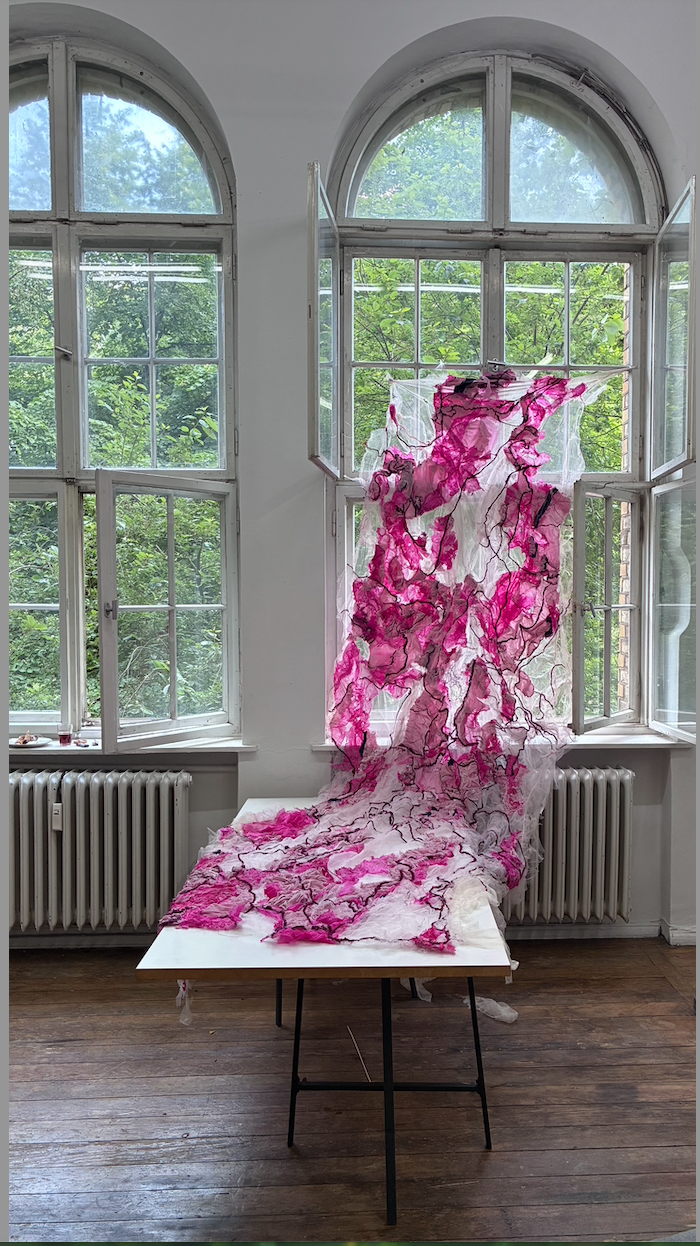
A Geography as Wide as a Wound
A Geography as Wide as a Wound, reclaimed fabric, tulle, 250 × 900 cm
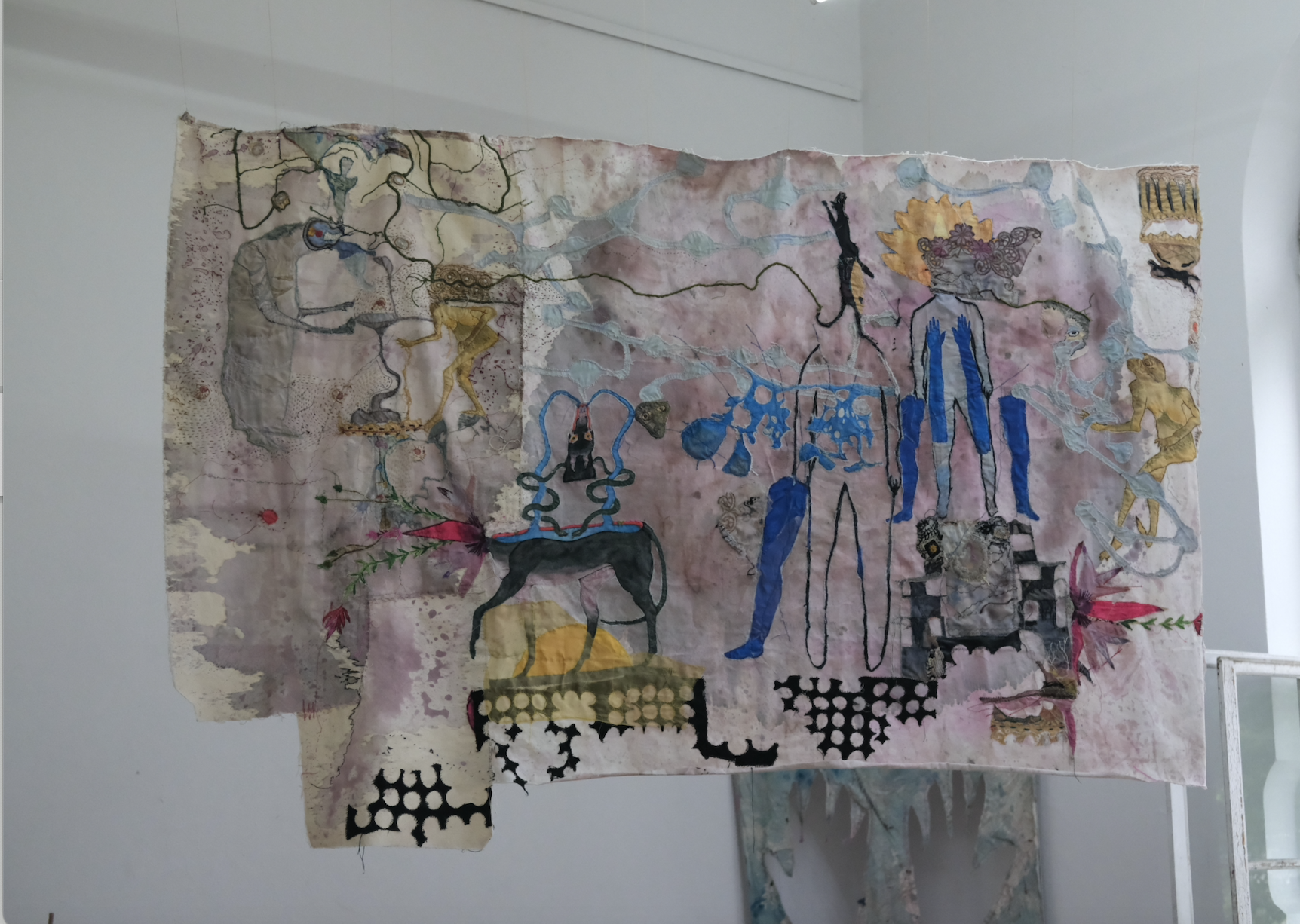
“My body, my companion, which is always sending its signals
“My body, my companion, which is always sending its signals… 2026, mixed media on fabric,
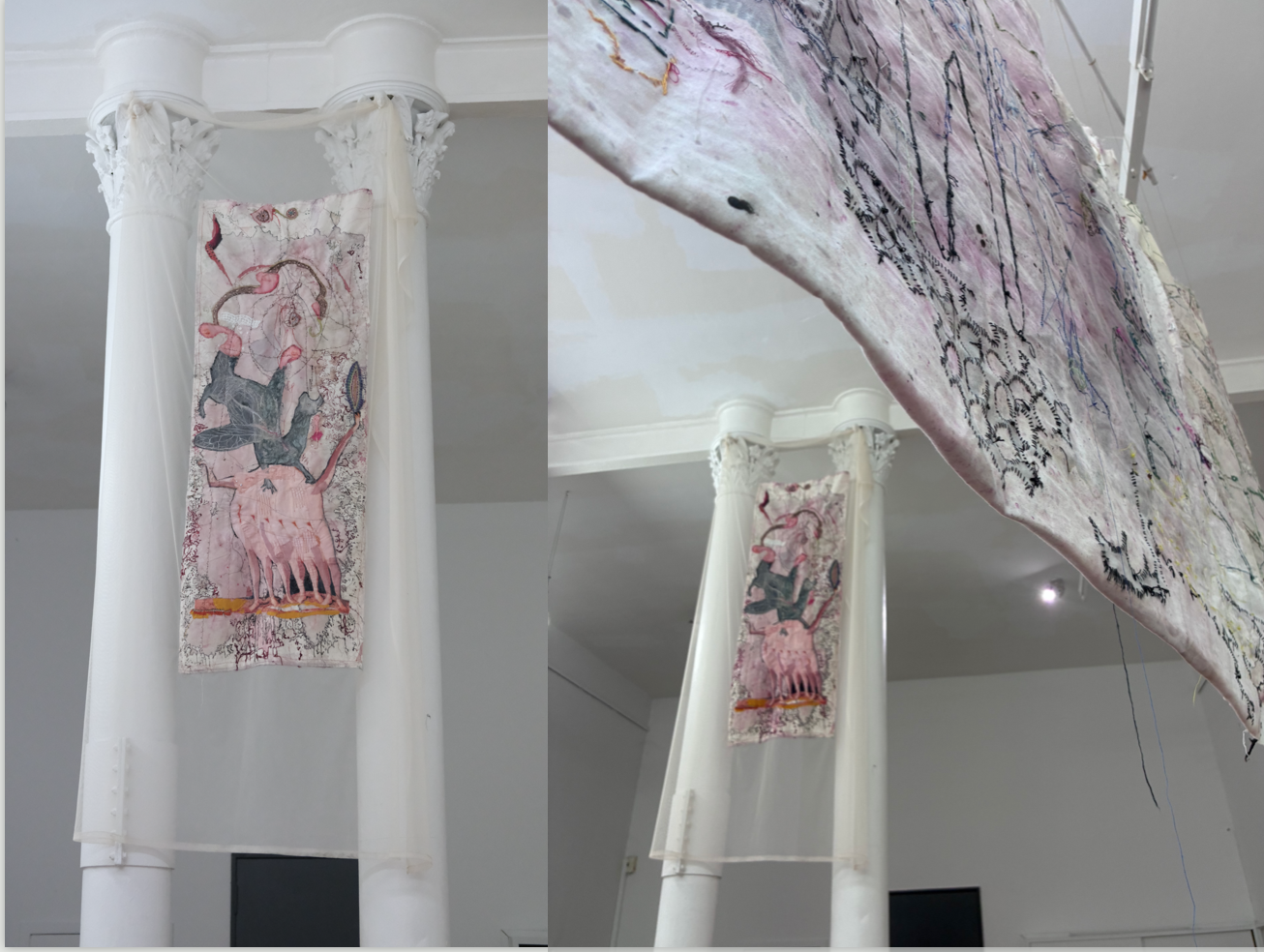
They Found Unique Souls in Scylla
They Found Unique Souls in Scylla, found mixed media on fabric and tulle,, 2026
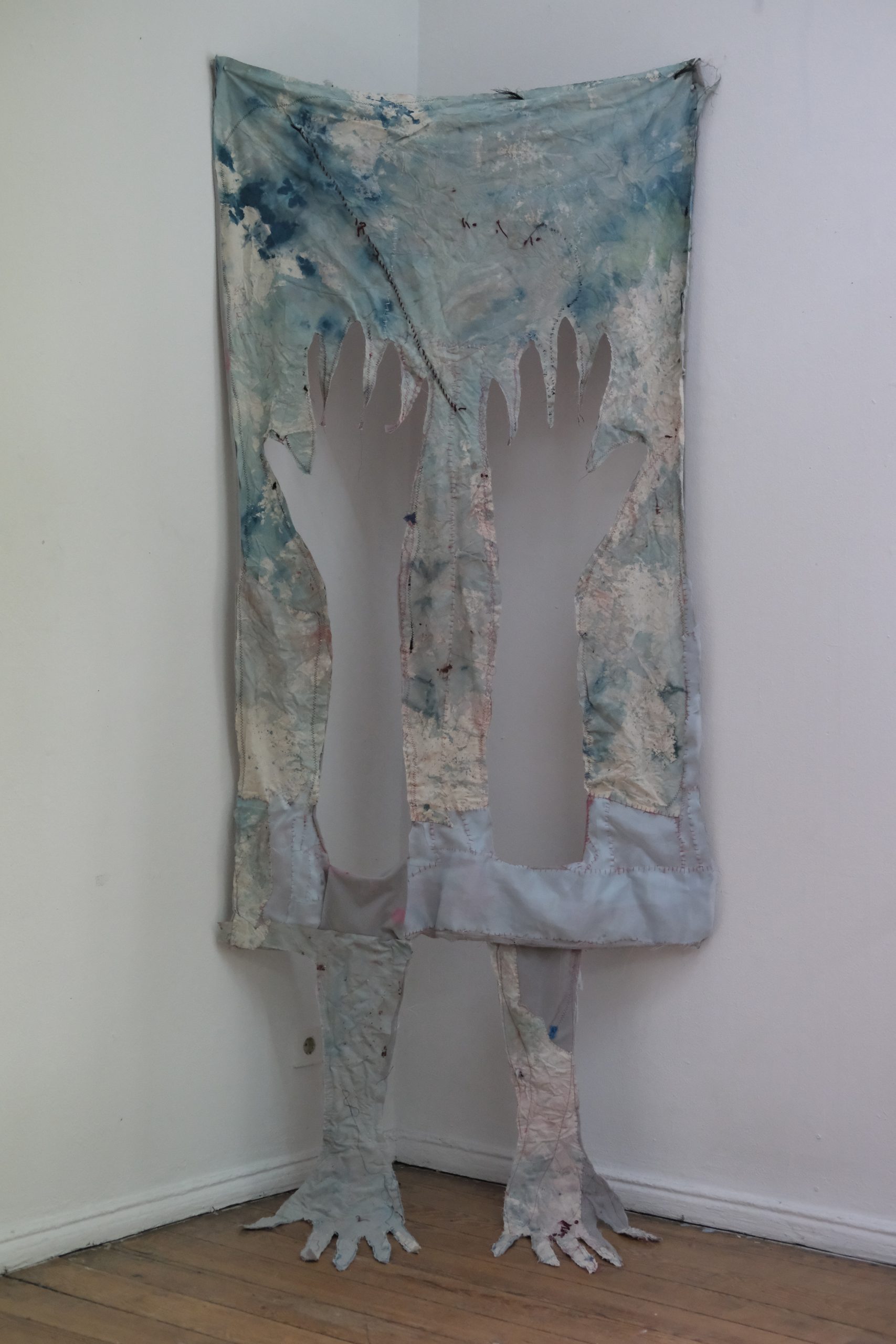
“The Image Took on All Forms”,
“The Image Took on All Forms”, found fabric, 2026
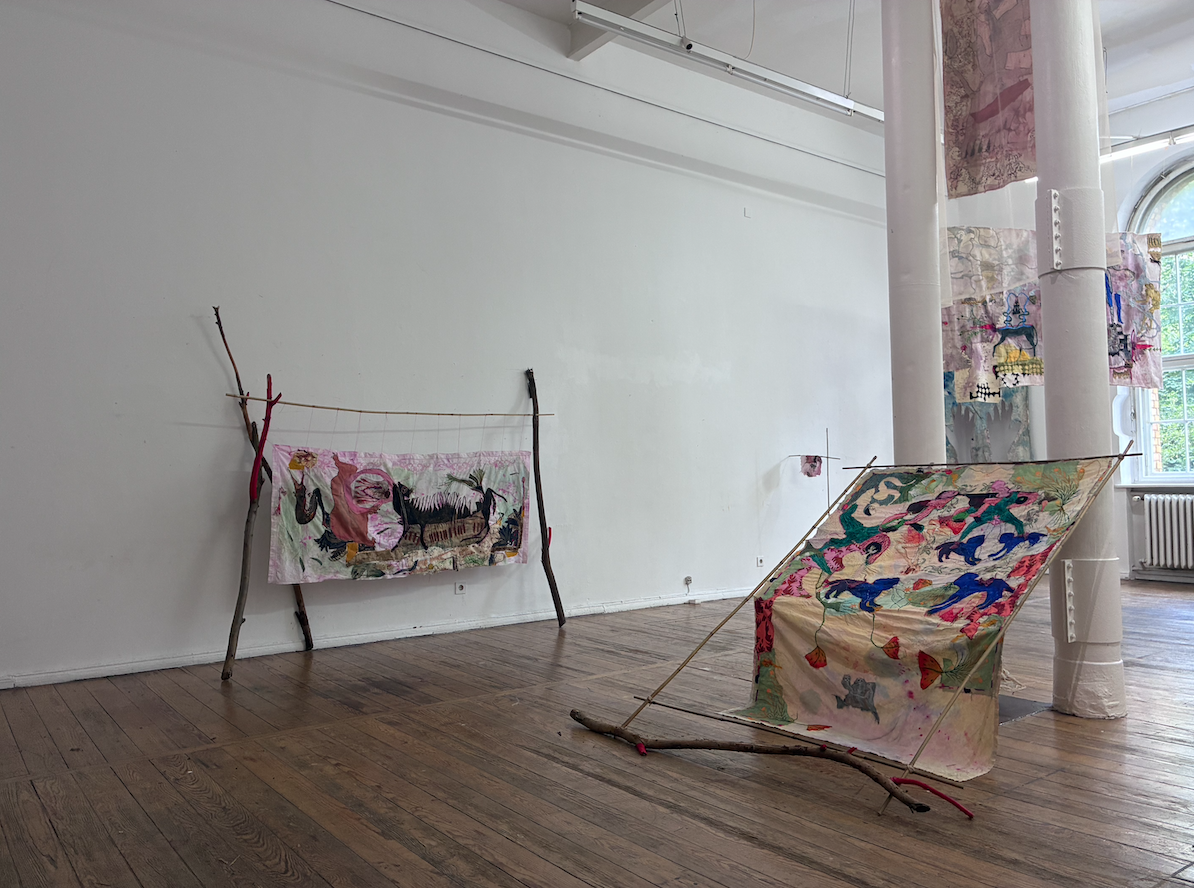
Bethanien /Kruezberg
Bethanien
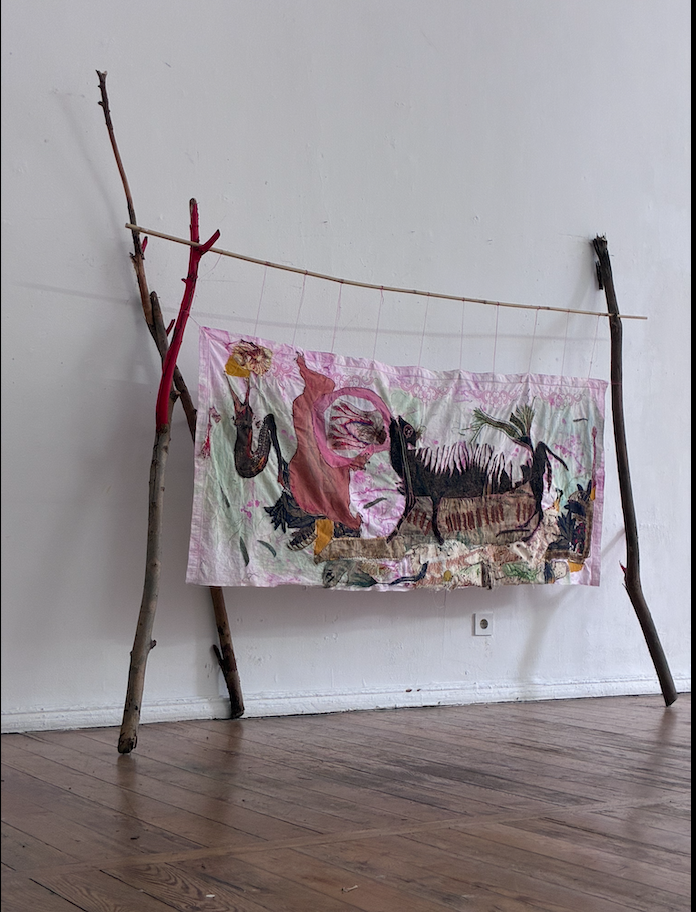
Support structures
Support structures, mixed media found on fabric and wood
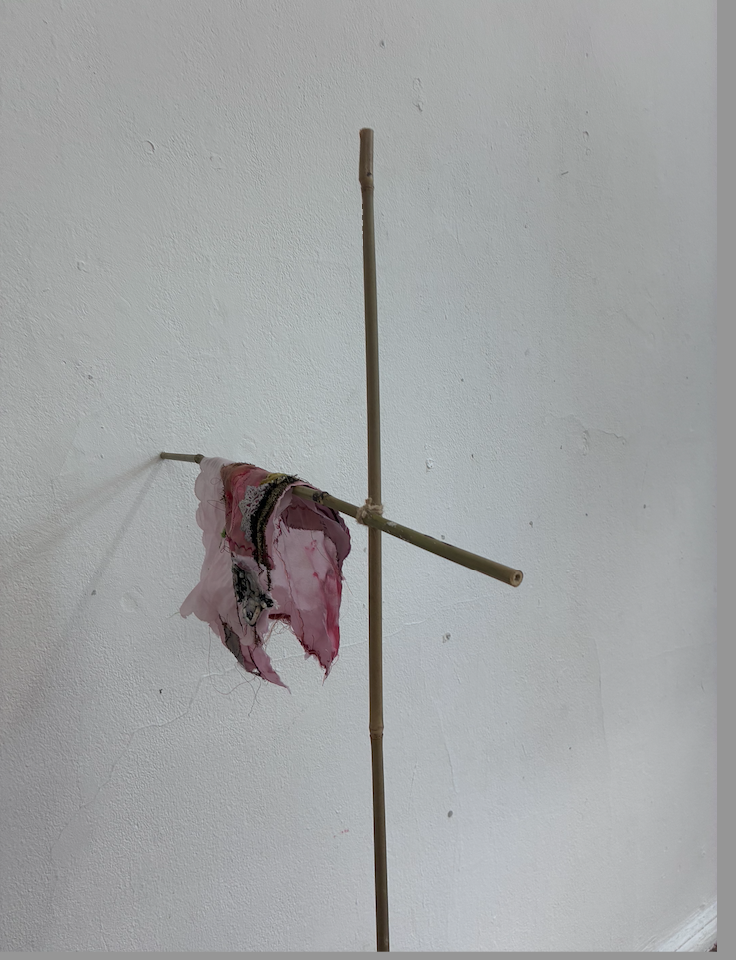
Support structures
Support structures, Wood and fabric,2026
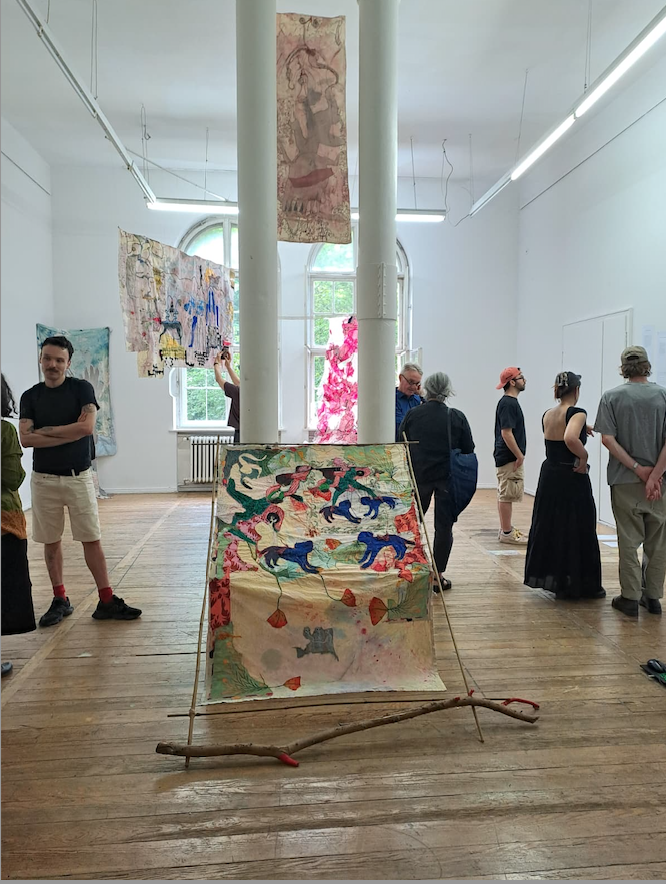
Istanbul-Berlin Residency: Open Studio , Kunstquartier Bethanien, Berlin,2026
Istanbul-Berlin Residency: Open Studio , Kunstquartier Bethanien, Berlin,2026
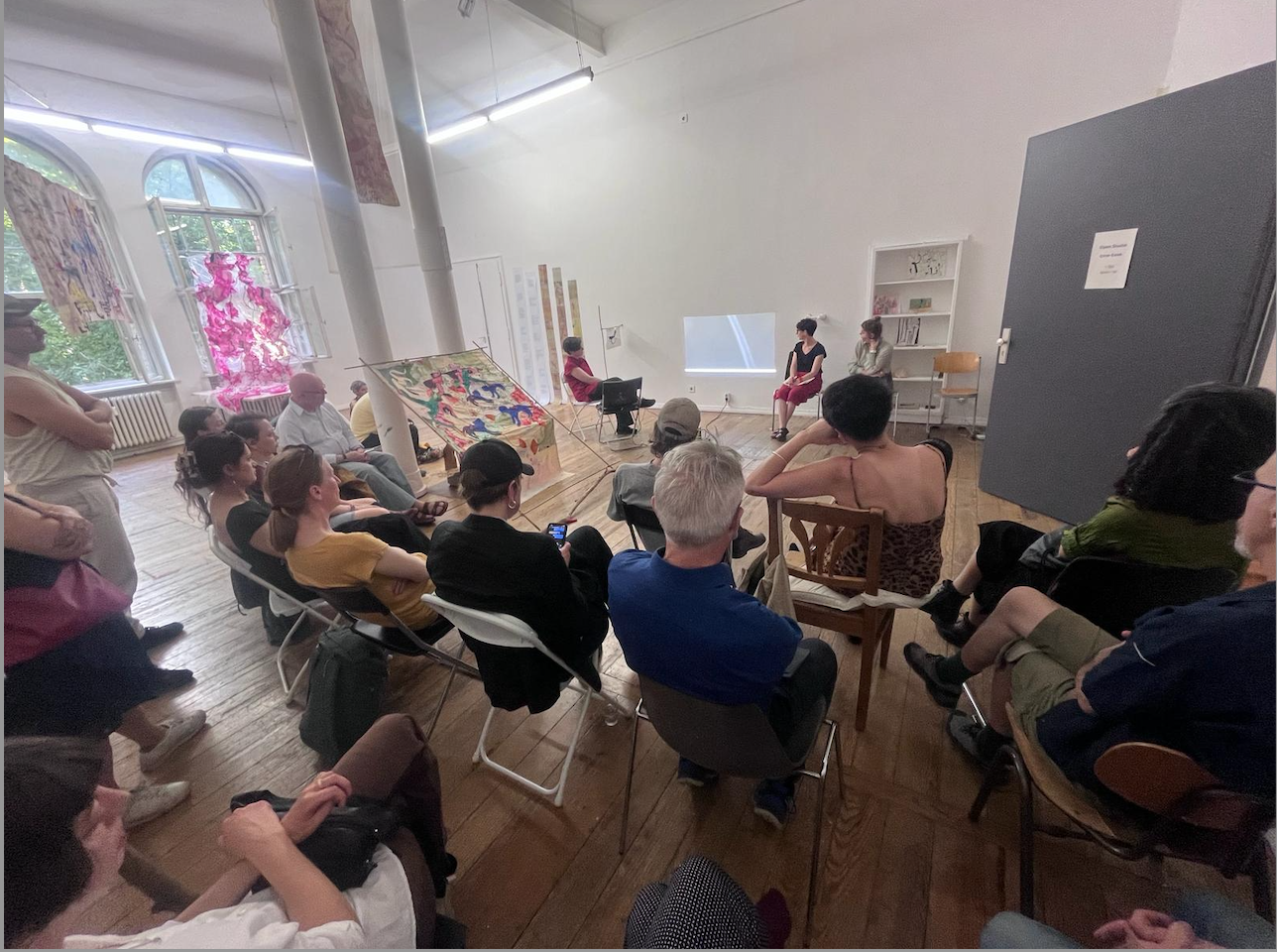
Open Studio ,Kunstquartier Bethanien,
Istanbul-Berlin Residency: Open Studio ,Kunstquartier Bethanien, Berlin,2026
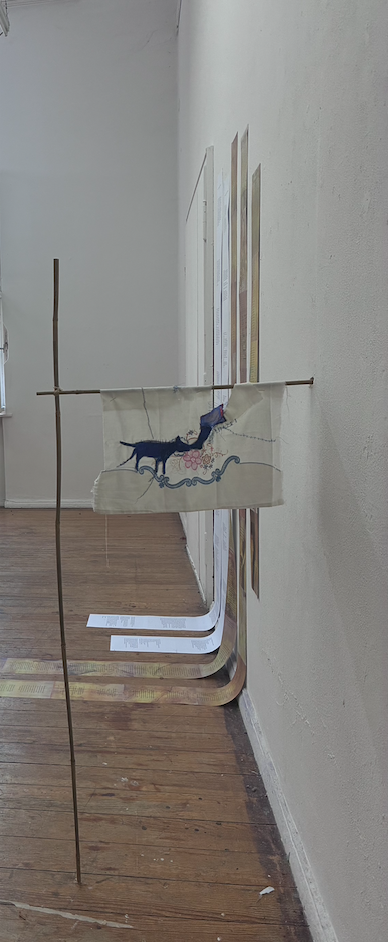
The Breach, reclaimed fabric, wood
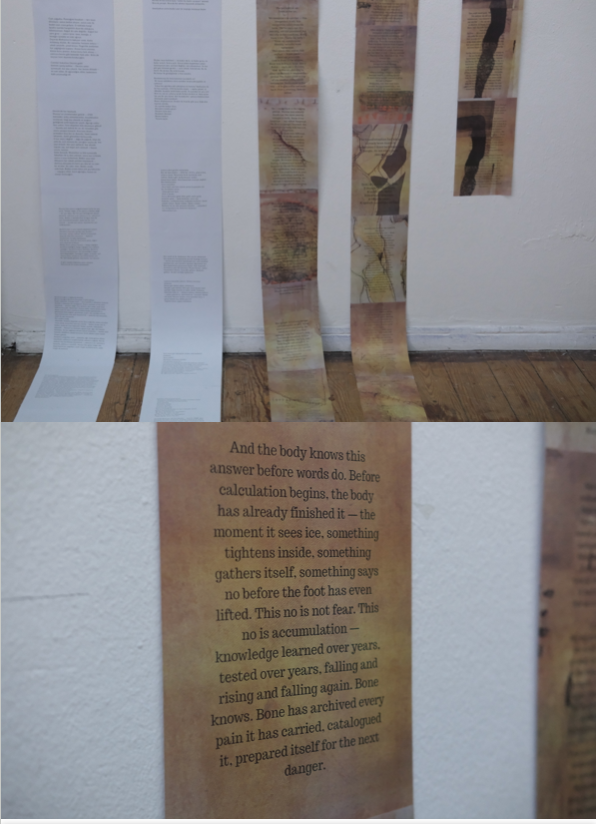
Before the Body Says No, tex
Before the Body Says No, text, 2026
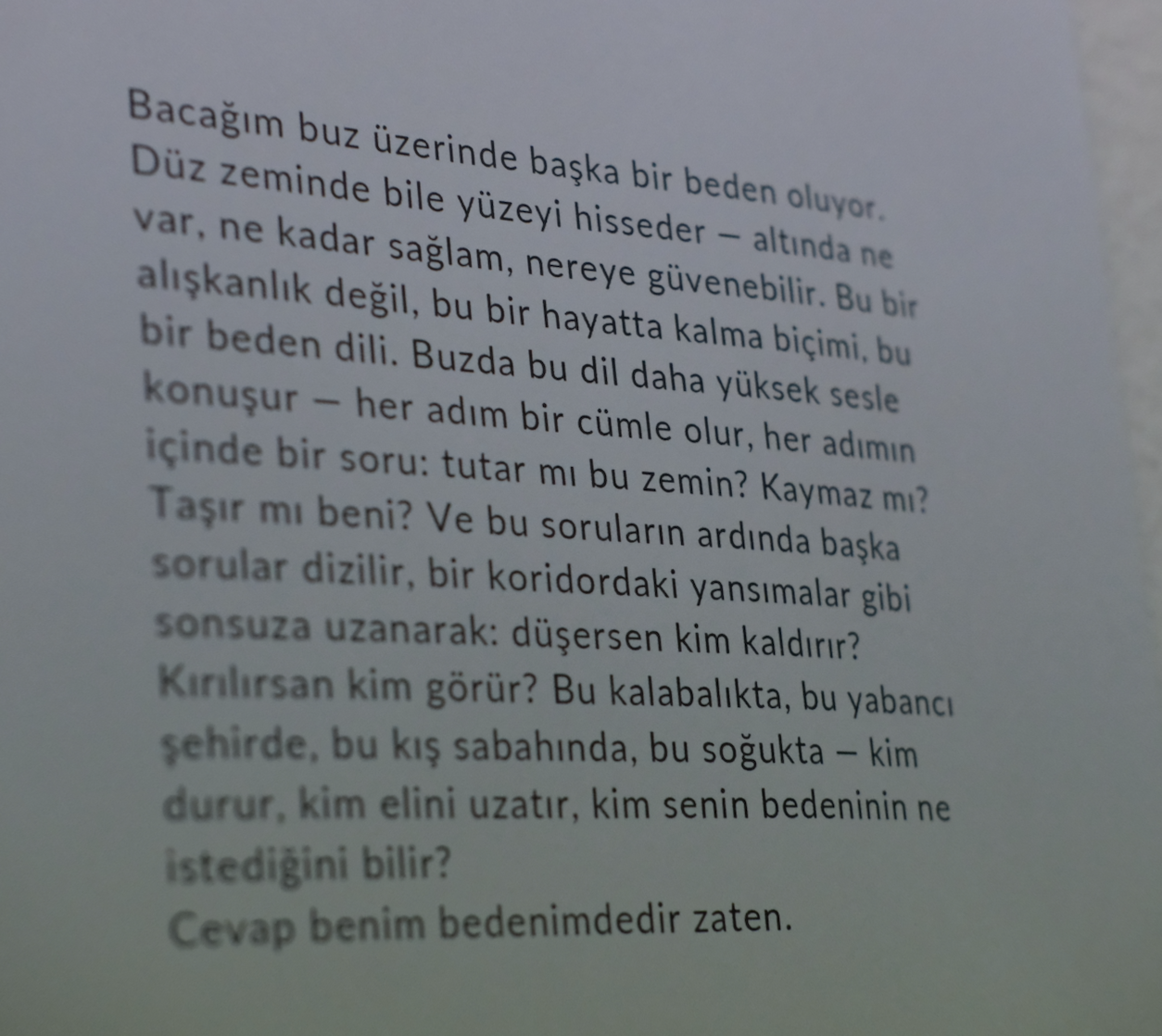
The answer is already in my body
The answer is already in my body, Text,
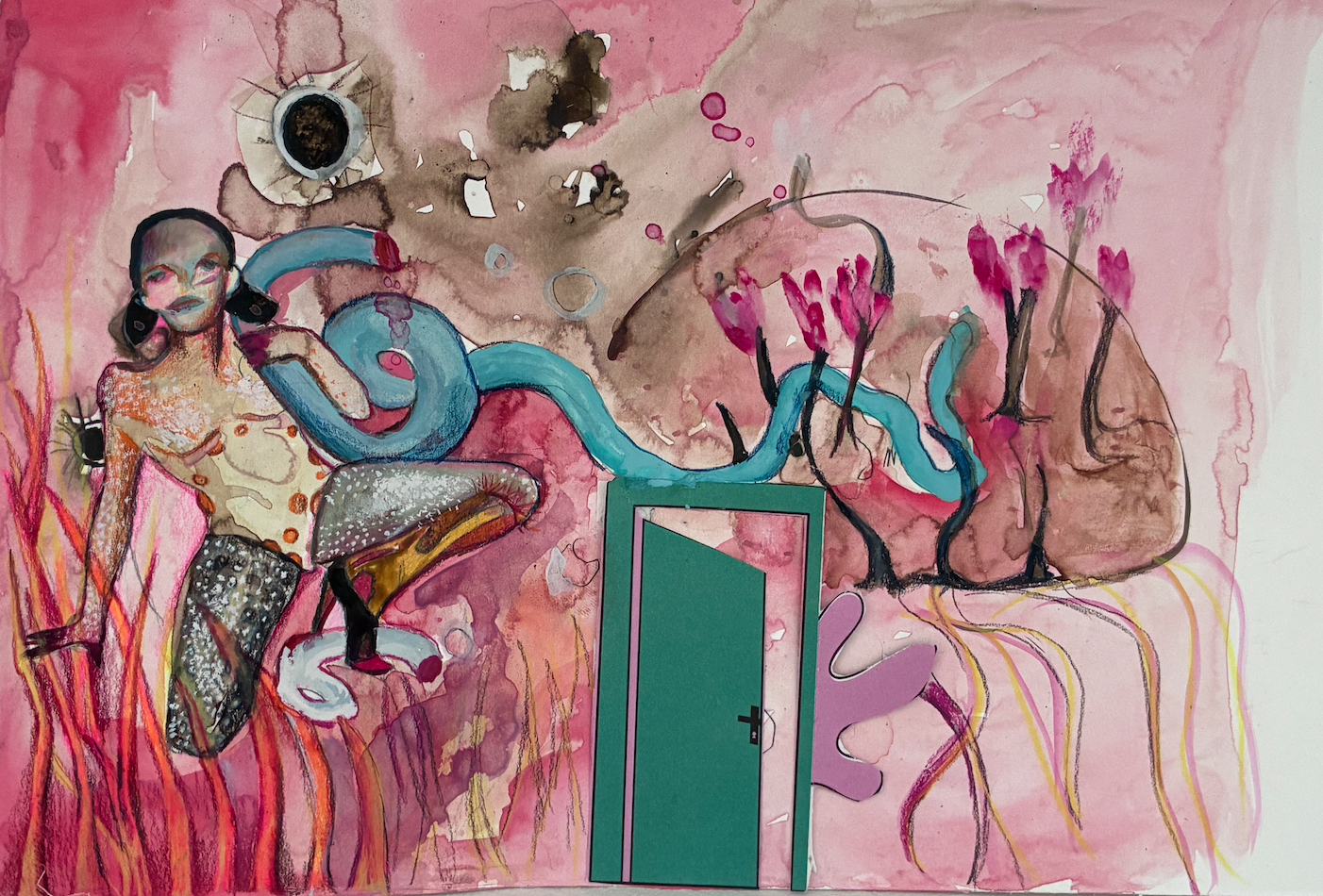
Pink
Pink, College, Watercolors and magazine, A4
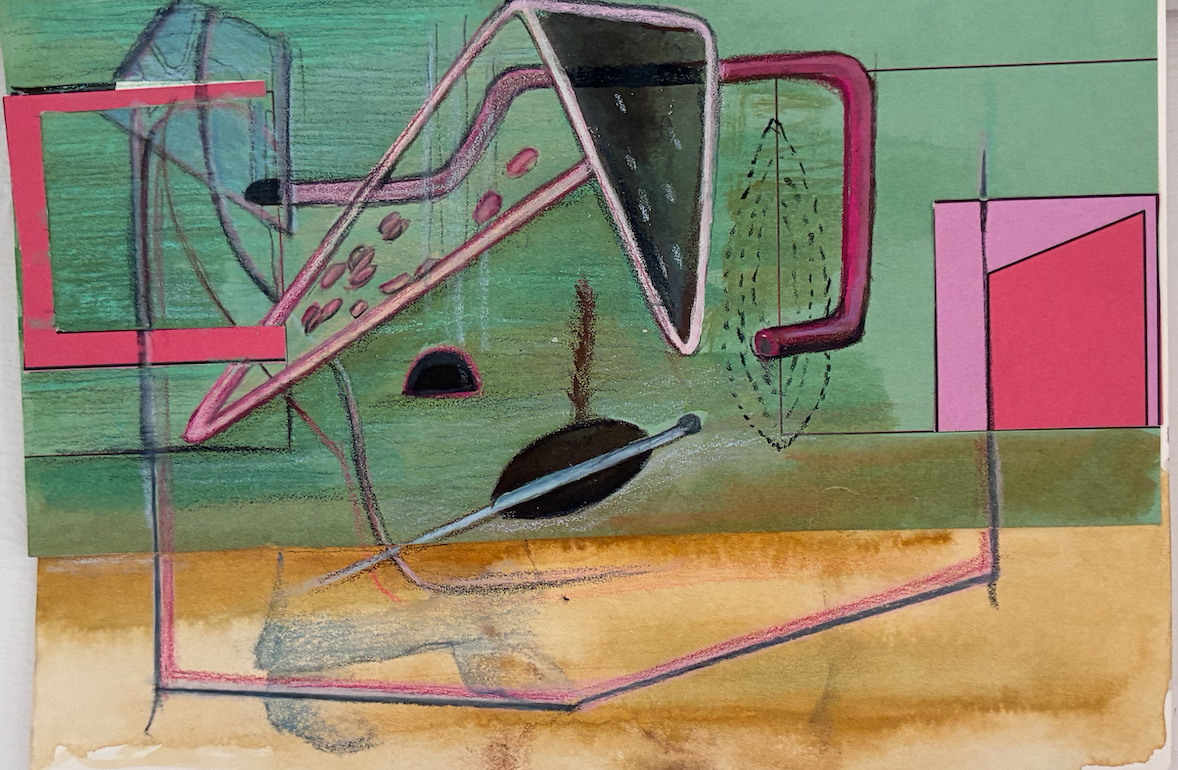
Access and accessibility
Access and accessibility, collage, watercolors, paper,2026
“Basting Stitches,”2026
A studio is sometimes like a loose stitch: the artist unpicks, joins, leaves things slack, tries again — because not everything needs to hold together permanently; sometimes it only needs to stay together for a while. Çınar Eslek ‘s time at the Kunstraum Kreuzberg/Bethanien in Berlin passed through exactly this kind of temporariness: the walls of this former hospital, carrying their own past like a body carries memory, began to sit alongside the artist’s thoughts on her own body.
Basting Stitch was built on this temporariness. Basting is a loose stitch used to hold fabric together not permanently, but for a while — a stitch made to be undone. The artist chose this name while bringing together her thoughts on the body, illness, care, aging, and memory: a way of thinking in which nothing is sewn together for good, yet everything can still hold, for a time.
The open studio https://ngbk.de/en/programm/termine/istanbul-berlin-stipendium-open-studio-mit-cinar-eslek opened a temporary gap in which the unfinished could be shared. Curator and writer Kate Brehme https://www.katebrehme.com/ took part in this day as a speaker, reading aloud from an essay the artist was working on at the time. The exhibition was already in place that same day; with Kate’s reading, a new space of thinking opened up around the works.
The exhibition then continued, remaining open for two weeks — becoming a period in which this research settled, temporarily, into the space. The conversation accompanying the exhibition moved the works beyond being merely objects to be viewed, opening a shared space of thinking around the body, care, accessibility, and place.
What remained at Bethanien was not only the works on view. It was a stretch of time in which the history of a building and the memory of a body touched one another — in which writing, speech, and visual production came together as different forms of the same process.
Çınar Eslek ‘s residency at Kunstquartier Bethanien was made possible through the Istanbul–Berlin exchange scholarship, a cooperation between the Senate Department for Culture and Europe, Kunstraum Kreuzberg/Bethanien in Berlin, and DEPO in Istanbul, established in 2018 to strengthen artistic exchange between the two cities.https://ngbk.de/en/programm/stipendiat-innen/kuenstler-innenstipendium-istanbul-berlin
Ice
There was a bed in the middle of the frozen canal.
I didn’t know why I was staring at it when I first saw it. There were deck chairs too. People sat on them, waiting for the sun, or lying quietly in whatever brief light they found. The deck chair didn’t surprise me. It had stuff to do outside. But the bed didn’t.
I had always thought of a bed as belonging inside a room. I realized that day I’d never questioned that. Some objects remain invisible until they change their place. A table can be moved to another room. A chair can be carried out to the street. But a bed? A bed being outside wasn’t just a change of place. It was as if the room itself had stepped outside along with it.
Someone was lying on it. Facing the winter sun. No one dared to look.
I did.
Then I thought: wasn’t the bed itself surprising? Or was it that the bed could still remain a bed? It hadn’t lost its function by changing place. It was still somewhere you rested, lay down, turned toward the sun. What had changed wasn’t the bed itself, but what surrounded it.
In the first weeks, I had relocated to a new spot too.
I’m not saying this because I’d come to Berlin. A person can move to another city; that alone isn’t a sufficient sentence. But some displacements remind a person of other displacements they had never considered before. Maybe that’s why I stared so long at the bed in the middle of the frozen canal. I didn’t know it at the time.
It was the dead of winter.
People were skating on the frozen canals. Same surface. Same cold. Same city. But not the same experience.
In the early days, I didn’t go outside.
I stood at the window.
That’s how I’ve learned about the city.
I’ve lived with a disabled body since childhood.
In the first weeks, walking had less to do with getting from one place to another than with my body learning a new ground.
I took tiny steps and barely lifted my feet off the ground.
One step.
Wait.
Then another step.
Sometimes I’d link arms with whoever was beside me, entrusting my weight to their rhythm. In those days, walking wasn’t something done alone. For a while I found my balance not in my own body, but between two bodies.
Looking back now, I see that the first thing I learned wasn’t walking.
It was sharing weight.
The cold was reawakening pains that had sat silently inside my body for years. That winter was the first time I thought of the body as also having a memory. I am not acquainted with this city, but my bones seemed to recognize the cold before I did.
Do bones have memory?
Or is it always pain that remembers?
Sometimes a person thinks they’ve lived in the same body for years. Then they travel to another city. And they realize their body has a passport too. Some pains cross the border before you do.
In the first weeks, I walked often. Maybe it was the slowest way to get familiar with a city. I passed the same pavements, waited at the same intersections, stood before the same staircases. Looking back now, I remember stopping more than walking. Accustoming a body to a new city takes longer than memorizing a new address.
Who is the first person a city gets to know?
Does she know our steps?
Or the places that slow us down?
One day I got dizzy. I started vomiting. I thought I should go to the hospital, but I didn’t.
At first I gave up, thinking I knew nothing about this new healthcare system.
Then I realized it wasn’t just bureaucratic hesitation.
After years of fighting to access healthcare as a disabled body in Turkey, asking for help can turn into a language the body has forgotten.
Some experiences don’t vanish into thin air; they become a reflex. A person learns to turn back before they’ve even reached the door.
That day I was alone in the room.
For the first time, silence seemed almost touchable,
When a person is left alone, they hear the sounds their body makes more clearly.
Its breath.
Its heartbeat.
Its stomach.
Its fear.
Just then, the research I’d been working on for a long time quietly came back to me.
I had been studying accessibility.
But I couldn’t access.
This wasn’t a contradiction.
It was a crack.
A thin crack that widened the more you looked into it.
Once I began looking through that crack, I started to see not just the city I lived in, but also the building I was staying in, in a different light.
That building’s name was Bethanien